23rd June 2026 | By Admin
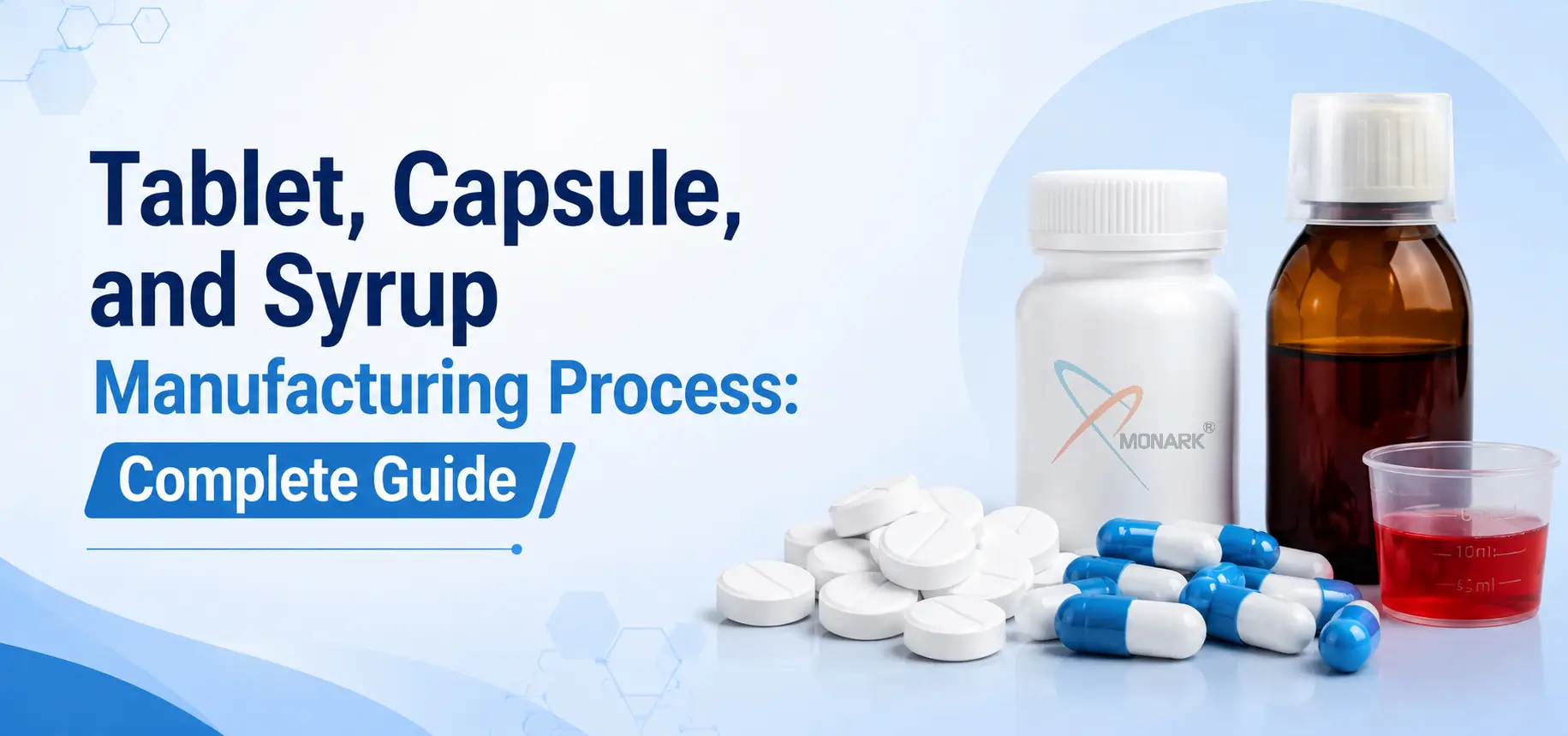
Tablet, Capsule, and Syrup Manufacturing Process: From Raw Materials to Finished Medicines 3 2
Ever Wonder How a Simple Tablet Reaches Your Medicine Cabinet? 22
Every day, millions of people take tablets, swallow capsules, or use medicinal syrups without giving much thought to how these products are made. What appears to be a simple medicine is actually the result of a highly controlled pharmaceutical manufacturing process involving advanced machinery, trained professionals, strict quality standards, and regulatory compliance.
A single mistake in formulation, blending, compression, or packaging can affect product quality and patient safety. This is why pharmaceutical companies invest heavily in modern manufacturing facilities, quality assurance systems, and GMP-compliant production practices.
Whether you're a pharmaceutical student, healthcare professional, distributor, or someone looking for reliable third-party pharmaceutical manufacturing services, understanding the manufacturing journey of tablets, capsules, and syrups provides valuable insight into the pharmaceutical industry.
In this guide, we'll walk through every major stage of the tablet, capsule, and syrup manufacturing processes, while exploring the roles of quality control, equipment, and regulatory compliance.
What is Pharmaceutical Manufacturing? 22
Pharmaceutical manufacturing is the process of converting raw materials and Active Pharmaceutical Ingredients (APIs) into finished medicinal products that are safe, effective, and ready for patient use.
The manufacturing cycle generally includes:
-
Raw material procurement
-
Formula development
-
Production processing
-
Quality control testing
-
Packaging
-
Storage and distribution
Each stage must comply with GMP Compliance in Pharmaceutical Manufacturing to ensure consistency and safety.
Tablet Manufacturing Process: Step-by-Step Production Guide
Tablets remain the most commonly prescribed dosage form worldwide because they are stable, easy to transport, cost-effective, and provide accurate dosing.
Step 1: Raw Material Selection and Dispensing
Everything begins with carefully selected pharmaceutical ingredients.
The manufacturing team verifies and weighs:
-
Active Pharmaceutical Ingredients (APIs)
-
Fillers
-
Binders
-
Lubricants
-
Disintegrants
-
Coating materials
Every ingredient undergoes laboratory testing before entering production.
Why This Stage Matters
Even minor variations in raw materials can affect tablet hardness, dissolution rate, and therapeutic performance.
Step 2: Granulation Process
Granulation is one of the most important stages in pharmaceutical tablet production.
Its primary purpose is to improve powder flow and create uniform granules for compression.
Wet Granulation
A liquid binder is added to create dense granules.
Benefits include:
-
Better compressibility
-
Improved content uniformity
-
Enhanced tablet strength
Dry Granulation
Used when ingredients are sensitive to moisture or heat.
Benefits include:
-
Faster processing
-
Lower production costs
-
Suitable for heat-sensitive drugs
Step 3: Blending and Mixing
The prepared granules are transferred to the blending equipment.
At this stage, pharmaceutical manufacturers ensure every tablet receives the exact amount of active ingredient.
Proper blending helps achieve:
-
Content uniformity
-
Consistent potency
-
Improved product quality
Step 4: Tablet Compression
This is where granules become tablets.
Using high-speed tablet compression machines, manufacturers compress the blended material into the required shape, size, and strength.
During compression, operators monitor:
-
Tablet weight
-
Thickness
-
Hardness
-
Friability
-
Appearance
This stage largely determines the final quality of the product.
Step 5: Tablet Coating Process
Many pharmaceutical products require coating for functional and aesthetic purposes.
Tablet coating can:
-
Protect sensitive ingredients
-
Improve patient acceptance
-
Mask unpleasant tastes
-
Control drug release
Modern facilities use automated coating systems to ensure uniform application.
Step 6: Packaging and Distribution
After passing quality inspection, tablets are packaged into:
-
Blister packs
-
Strip packs
-
Bottles
-
Unit-dose packaging
Packaging protects products against moisture, contamination, and environmental damage.
For a deeper understanding of production technologies, businesses often explore specialized resources on the Tablet Manufacturing Process and dosage form development.
Capsule Manufacturing Process Explained
Capsules have become increasingly popular because they are easy to swallow and can accommodate a wide range of formulations.
Capsule Shell Manufacturing
Capsule shells are commonly manufactured using:
-
Gelatin
-
HPMC (Vegetarian Capsules)
The shells are carefully inspected for:
-
Thickness
-
Strength
-
Moisture content
-
Visual defects
Capsule Filling Process
The formulation is filled into empty capsules using automated equipment.
The filling process ensures:
-
Uniform dosage
-
High production efficiency
-
Minimal product loss
Advanced capsule filling machines can process thousands of capsules per hour.
Capsule Locking and Sealing Process
Once filled, the capsule body and cap are securely locked together using automated machinery.
The locking and sealing process helps ensure:
-
Secure capsule closure
-
Protection against moisture and contamination
-
Improved product stability and shelf life
-
Tamper-evident packaging and safety
-
Reduced risk of capsule separation during handling
Some pharmaceutical formulations also undergo band sealing or liquid sealing for enhanced protection and product integrity.
Capsule Inspection and Packaging
Before release, capsules undergo:
-
Visual inspection
-
Weight verification
-
Dissolution testing
-
Microbiological analysis
Products are then packaged for distribution.
Many manufacturers today operate integrated Tablet Capsule Manufacturing Process facilities capable of producing multiple dosage forms under one GMP-certified environment.
Syrup Manufacturing Process in the Pharmaceutical Industry
Liquid medicines require a different manufacturing approach than solid dosage forms.
The syrup manufacturing process focuses on achieving uniformity, stability, taste, and microbial safety.
Ingredient Preparation
The production team gathers and tests:
-
APIs
-
Sweeteners
-
Preservatives
-
Flavors
-
Colors
-
Stabilizers
Only approved materials proceed to production.
Syrup Base Preparation
A syrup base is prepared using purified water and sweetening agents.
This stage determines:
-
Viscosity
-
Taste
-
Product stability
The mixture is filtered before further processing.
Mixing and Homogenization
Ingredients are combined in specialized vessels equipped with agitators and homogenizers.
Homogenization helps achieve:
-
Uniform distribution
-
Better texture
-
Consistent appearance
Filtration and Quality Testing
The liquid passes through filtration systems to remove particles and impurities.
Quality control teams evaluate:
-
pH levels
-
Viscosity
-
Appearance
-
Assay values
-
Microbial limits
Filling and Packaging
Automated filling lines accurately fill syrup into bottles before sealing and labeling.
This stage includes:
-
Bottle washing
-
Filling
-
Capping
-
Labeling
-
Batch coding
Businesses searching for a reliable Syrup Manufacturing Company in India often prioritize manufacturers with advanced liquid production facilities and strong quality assurance systems.
Pharmaceutical Manufacturing Equipment Used in Production
Modern pharmaceutical facilities rely on advanced equipment to maintain quality and efficiency.
|
Equipment |
Purpose |
|
Rapid Mixer Granulator |
Granulation |
|
Fluid Bed Dryer |
Drying |
|
Multi Mill |
Particle Size Reduction |
|
Tablet Press Machine |
Tablet Compression |
|
Coating Machine |
Tablet Coating |
|
Capsule Filling Machine |
Capsule Production |
|
Manufacturing Vessel |
Syrup Preparation |
|
Homogenizer |
Uniform Mixing |
|
Filling Machine |
Packaging |
Why GMP Compliance Matters in Pharmaceutical Manufacturing
In the pharmaceutical industry, quality cannot be left to chance. Every tablet, capsule, or syrup must be manufactured under controlled conditions to ensure it delivers the intended therapeutic effect safely and consistently. This is where Good Manufacturing Practices (GMP) play a critical role.
GMP guidelines establish a framework for maintaining high standards throughout the manufacturing process, from raw material sourcing and equipment maintenance to production, testing, packaging, and distribution. By following these standards, pharmaceutical manufacturers can minimize errors, prevent contamination, and maintain product integrity across every batch.
Key Benefits of GMP Compliance
-
Ensures consistent product quality and performance
-
Reduces the risk of contamination and manufacturing defects
-
Improves patient safety and treatment outcomes
-
Supports regulatory compliance and market approvals
-
Strengthens traceability and documentation practices
-
Builds trust among healthcare professionals and consumers
Ultimately, GMP compliance is not just a regulatory requirement; it is a commitment to delivering safe, effective, and high-quality pharmaceutical products.
Tablet vs Capsule vs Syrup Manufacturing Comparison
Understanding these differences helps pharmaceutical companies optimize production efficiency while ensuring product quality and patient satisfaction.
|
Parameter |
Tablets |
Capsules |
Syrups |
|
Dosage Form |
Solid |
Solid |
Liquid |
|
Manufacturing Complexity |
Moderate |
Moderate |
High |
|
Stability |
High |
Moderate |
Moderate |
|
Packaging |
Blister/Container |
Blister/Container |
Bottles |
|
Patient Convenience |
High |
Very High |
High |
The tablet, capsule, and syrup manufacturing process involves converting pharmaceutical ingredients into finished dosage forms through formulation, granulation, blending, compression or filling, quality testing, and packaging. Each stage follows strict GMP guidelines to ensure product safety, effectiveness, consistency, and compliance with pharmaceutical regulations.
Choosing the Right Pharmaceutical Manufacturing Partner
Behind every successful pharmaceutical brand is a manufacturing partner that prioritizes quality, consistency, and compliance. Choosing the right partner is more than a business decision; it's a commitment to delivering safe and effective healthcare products to patients.
Look for a company that offers:
-
WHO-GMP certified facilities
-
Comprehensive quality control
-
Modern manufacturing infrastructure
-
Regulatory expertise
-
Flexible production capabilities
Many growing pharmaceutical businesses leverage Third Party Manufacturing, PCD Franchise Services, Ethical Promotion, and PCD Pharma Franchise opportunities to scale operations without investing in their own production facilities.
What Happens If Pharmaceutical Manufacturing Standards Are Not Followed?
In pharmaceutical manufacturing, even a small error can have serious consequences. Issues such as incorrect ingredient proportions, contamination, inadequate testing, or improper packaging can affect the safety, effectiveness, and stability of medicines.
When manufacturing standards are not followed, companies may face:
-
Product recalls and regulatory penalties
-
Reduced product efficacy
-
Cross-contamination risks
-
Shortened shelf life
-
Loss of customer trust
-
Damage to brand reputation
This is why pharmaceutical manufacturers operate under strict GMP guidelines, validated processes, and comprehensive quality control systems. Every tablet, capsule, and syrup must meet predefined quality standards before it reaches patients.
Simply put, pharmaceutical quality isn't inspected into a product at the end; it's built into every step of the manufacturing process.
Ready to Launch or Expand Your Pharmaceutical Business?
Choosing the right manufacturing partner can make all the difference in the quality, consistency, and success of your pharmaceutical products. At Ethics Medinova, we combine advanced manufacturing capabilities, stringent quality control, and GMP-compliant processes to deliver reliable pharmaceutical solutions that meet industry standards.
Whether you require Third Party Manufacturing, Tablet & Capsule Manufacturing, Pharmaceutical Syrup Manufacturing, PCD Pharma Franchise, or customized pharmaceutical production services, our team is ready to support your business at every stage.
Let's Build Success Together
Partner with Ethics Medinova for high-quality pharmaceutical manufacturing, timely delivery, and dedicated customer support.
📞 Call Us Today: +91-8653391199 | +91-9023256719 | +91-9888656719
📧 Email: ethicsmedinova@gmail.com
📠Address: Plot No. 201, HSIIDC, Alipur, Barwala, Haryana, India
Get in touch today to discuss your manufacturing requirements, request a quotation, or explore partnership opportunities with one of India's growing pharmaceutical manufacturing companies.
Frequently Asked Questions
What is the tablet manufacturing process?
Tablet manufacturing involves dispensing, granulation, blending, compression, coating, testing, and packaging under controlled conditions.
How are pharmaceutical capsules manufactured?
Capsules are produced through shell preparation, filling, locking, inspection, and packaging processes.
What is the syrup manufacturing process?
Syrup manufacturing includes ingredient preparation, syrup base formulation, mixing, filtration, testing, filling, and packaging.
Why is GMP important in pharmaceutical manufacturing?
GMP ensures product quality, consistency, safety, and compliance with regulatory requirements.
What equipment is commonly used in pharmaceutical manufacturing?
Manufacturers use granulators, dryers, tablet presses, capsule filling machines, homogenizers, and automated filling systems.